From Zero-Dose to Protected: Thousands of Communities Reconnected
 merf-pakistan
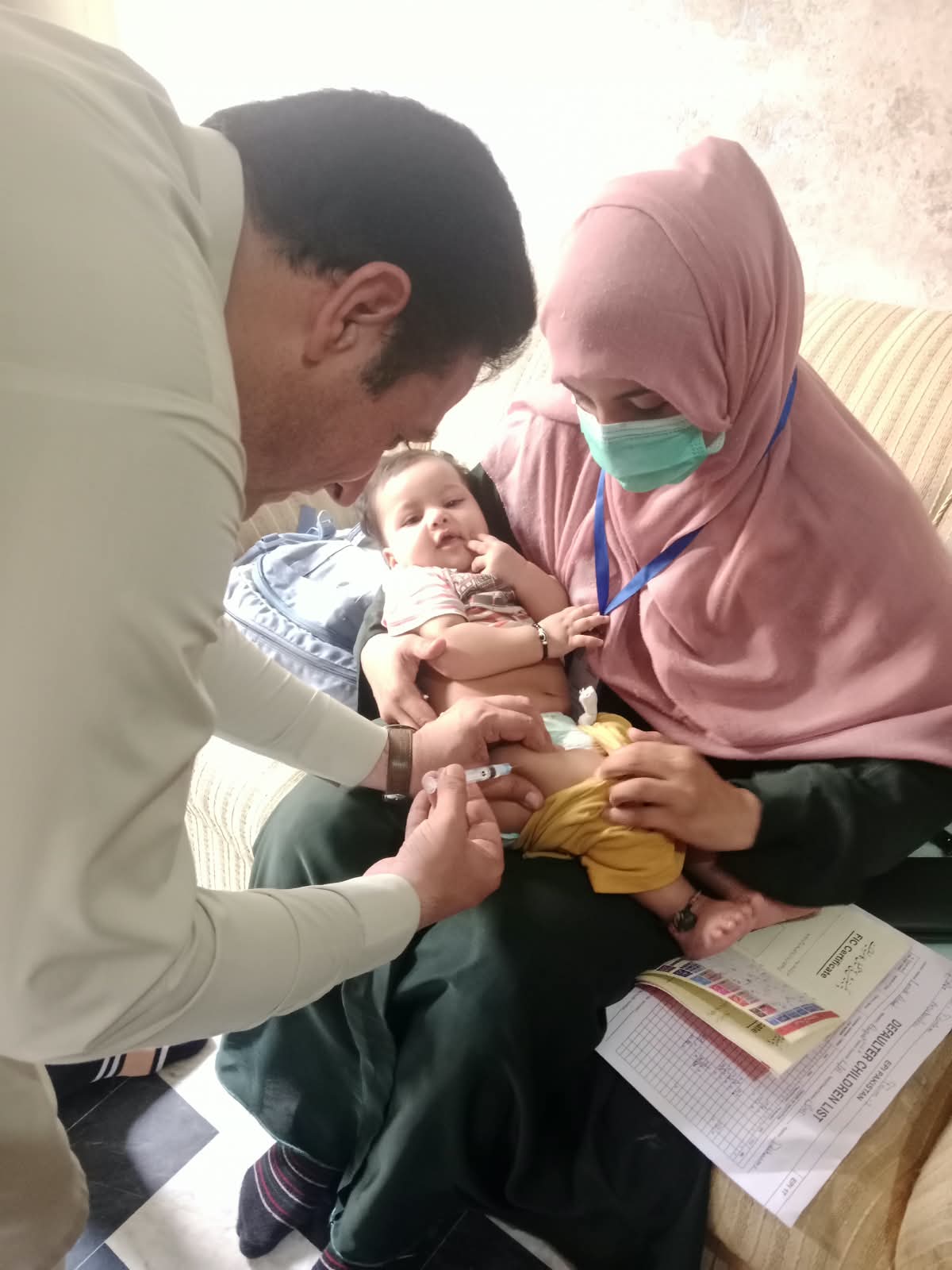
In 2019, the union councils MERF now serves were among the most difficult places in Pakistan to vaccinate a child. Coverage for core antigens sat between 72% and 79% -leaving roughly one in four children exposed. These SHRUCs were characterised by chronic vaccine refusals, high population mobility that caused children to fall off tracking systems, and deep-seated mistrust of health workers who arrived only for short, campaign-style vaccination drives and then disappeared.
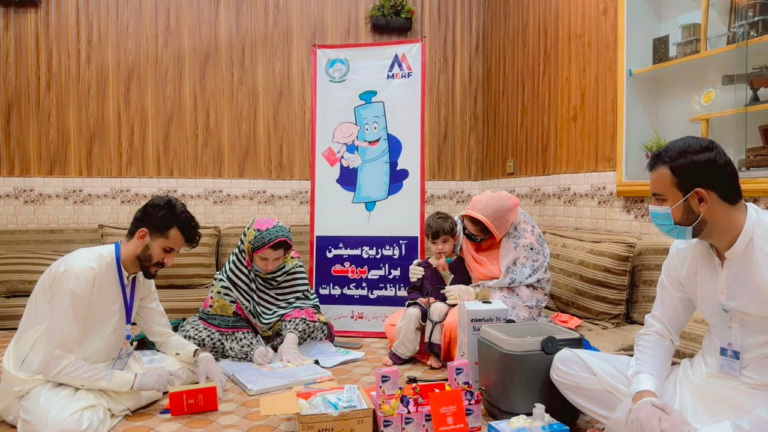
With support from Gates Foundation, MERF took on management of 15 civil dispensaries embedded permanently within these communities. The strategic shift was deliberate: rather than treating immunization as an isolated campaign activity, MERF folded routine EPI services into a full primary healthcare offering -free OPD consultations, essential medicines, and maternal and newborn care – so that a family visiting for a fever, an antenatal check-up, or a malnourished child would also, in the same visit, be screened, registered, and vaccinated.
This integration proved to be the turning point. As OPD consultations climbed from 40,013 a month in May 2021 to 186,434 by July 2026, each visit became a touchpoint for the immunization team. Community-based mobilizers worked alongside clinical staff to trace zero-dose children door to door, ultimately reaching 31,939 of them, while dedicated counselling teams sat with hesitant families to address their concerns directly -converting 14,990 refusals into acceptance. A parallel defaulter-tracing effort brought 198,803 children who had missed scheduled doses back into the system.
The result, measured against the 2019 baseline, is a set of coverage gains rarely seen at this scale in high-risk settings: OPV-0 coverage rose 28 percentage points to 100%, Pentavalent-III rose 24 points to 98%, IPV-1 rose 30 points to 103%, and MR-1 rose 16 points to 95%. Fully immunized children coverage rose from 81.3% to 83.0% between monitoring rounds -a meaningful gain in a population where every additional percentage point represents real children newly protected against preventable disease, including polio.
These gains did not come from immunization services alone. Maternal and newborn health improved in step: 173,258 antenatal consultations and 53,349 postnatal consultations were delivered, and 1,627 women delivered safely at MERF’s two BEmONC sites at Model EPI and Toor Baba. Nutrition teams screened 184,077 children, catching severe acute malnutrition early in 6.8% of cases and linking them to treatment. And across the wider community, 82,532 SBCC awareness sessions -reinforced by 1,084 focus group discussions and 333 school-based creative activities -reached 907,084 people with health messaging designed to normalise vaccination and routine care.
Perhaps the most telling number is not a coverage percentage but a satisfaction score: 91.3% of patients leaving MERF’s facilities report being satisfied with their care, and 90% say they would recommend the facility to others. In communities that once viewed health workers with suspicion, that is the real measure of what has changed -trust has been rebuilt, one consultation at a time, and with it, some of the country’s hardest-to-reach children now stand protected.
Key Achievements (2021–2026 Reporting Period)
The table below reproduces the full set of programme indicators tracked across the reporting period, consolidated from routine monitoring records of the 15 civil dispensaries.
| Indicator (2021–2026 reporting period) | Result | Notes |
| TPVICs Fully immunized children | 81.3% → 83.0% | Round 3 → Round 4 |
| OPV-0 coverage (2019 vs 2026 – Jan–Jul) | 72% → 100% | (28% ↑) |
| Pentavalent-III coverage (2019 vs 2026 – Jan–Jul) | 74% → 98% | (24% ↑) |
| IPV-1 coverage (2019 vs 2026 – Jan–Jul) | 73% → 103% | (30% ↑) |
| MR-1 coverage (2019 vs 2026 – Jan–Jul) | 79% → 95% | (16% ↑) |
| OPD consultations | 1,506,762 (↑) | 40,013 → 186,434 (May 2021 → Jul 2026) |
| Zero-dose children reached (May 2021–Jul 2026) | 31,939 | ↑ trend |
| Refusals converted to acceptance (May 2021–Jul 2026) | 14,990 | ↑ trend |
| Defaulters vaccinated (May 2021–Jul 2026) | 198,803 | ↑ trend |
| ANC-1 to ANC-4+ consultations (May 2021–Jul 2026) | 173,258 total | – |
| Safe deliveries (2 BEmONC sites) (as of Sep 2026) | 1,627 | Model EPI → 930, Toor Baba → 697 |
| PNC consultations (1st & 2nd visits) (May 2021–Jul 2026) | 53,349 | – |
| Children screened for malnutrition (May 2021–Jul 2026) | 184,077 | SAM rate 6.8% |
| SBCC awareness sessions (May 2022–Jul 2026) | 82,532 sessions | 907,084 people reached |
| Focus Group Discussions (May 2024–Jul 2026) | 1,084 | – |
| School Based Creative Activities conducted | 333 | – |
| Patient satisfaction (Exit Survey) | 91.3% satisfied | 90% would recommend |
1. Closing the Immunization Gap
Coverage for all four tracked antigens has climbed decisively above the 2019 baseline. OPV-0 coverage reached 100% of target, Pentavalent-III 98%, IPV-1 103%, and MR-1 95% -gains of 16 to 30 percentage points. Coverage figures at or above 100% reflect denominator/target-population estimation common in EPI reporting, and signal that the programme is now reaching essentially the full eligible birth cohort in these union councils, not merely a growing share of it.
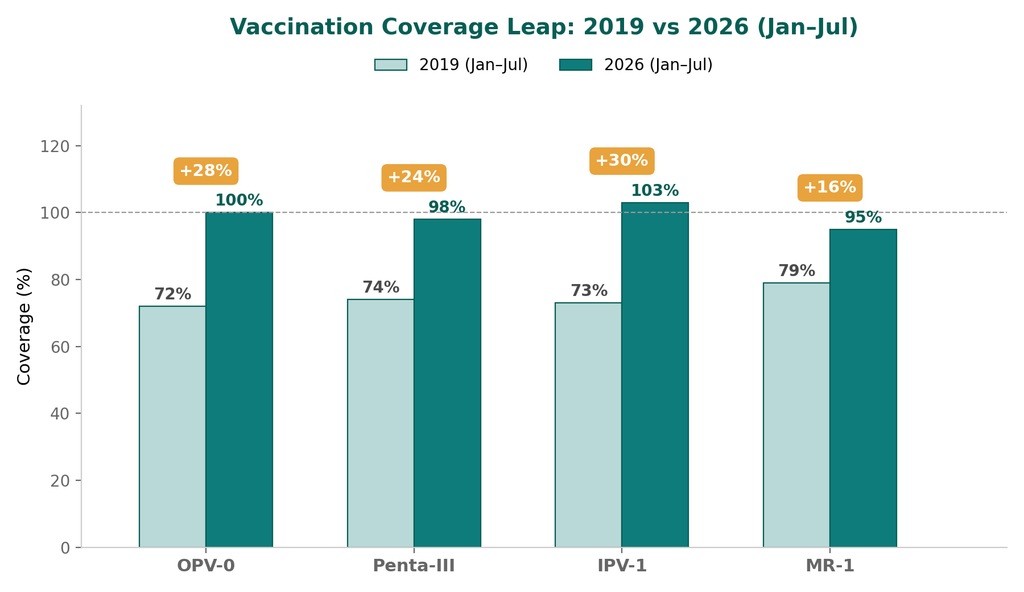
Figure 1. Antigen-specific coverage, 2019 vs 2026 (Jan–Jul), against 2019 baseline.
2. A Health System People Actually Use
Monthly OPD consultations grew from 40,013 in May 2021 to 186,434 in July 2026 -a 366% increase -cumulating to over 1.5 million consultations across the reporting period. This is the clearest single indicator that communities in these SHRUCs now see MERF’s civil dispensaries as their default, trusted point of care rather than a service to avoid.
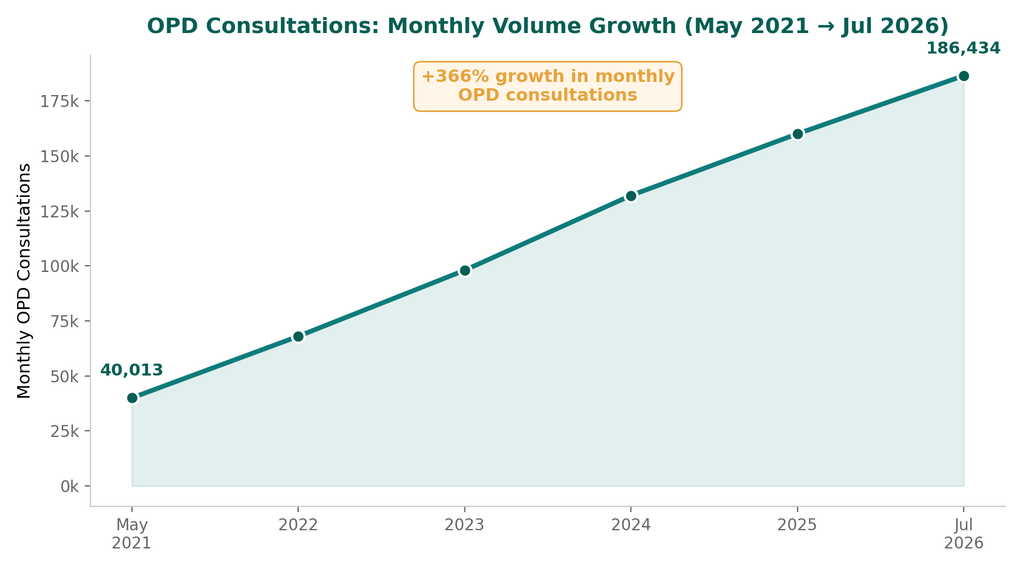
Figure 2. Monthly OPD consultation volume, May 2021 → July 2026.
3. Turning Resistance into Acceptance
Behind the coverage numbers is a harder-won achievement: direct engagement with the families most resistant to vaccination. Community teams reached 31,939 zero-dose children who had never received a single vaccine, converted 14,990 outright refusals into acceptance, and traced and vaccinated 198,803 defaulters who had fallen off the immunization schedule. Together these figures represent the demand-side work that made the supply-side coverage gains possible.
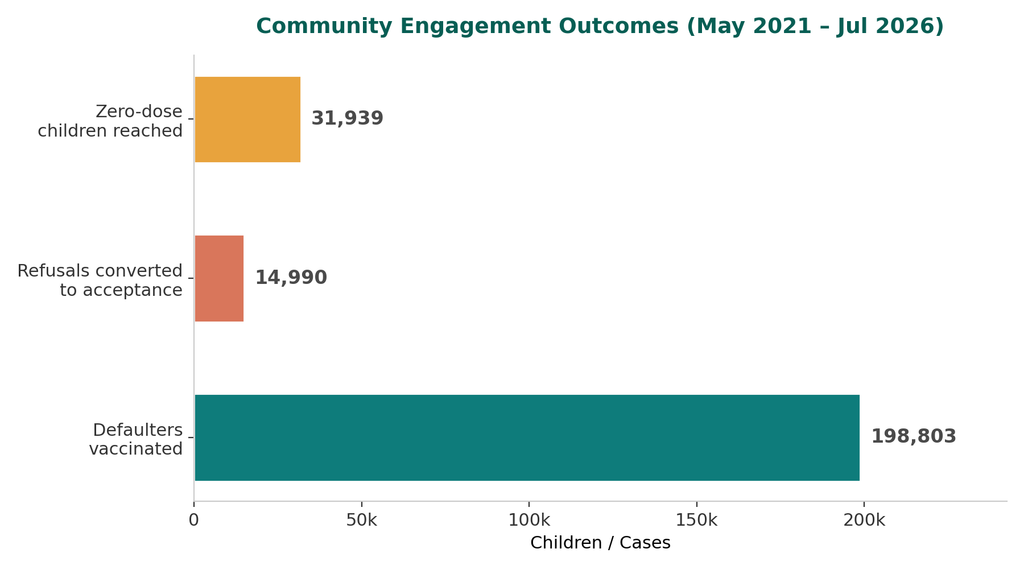
Figure 3. Community engagement outcomes, May 2021 – July 2026.
4. Strengthening the Wider PHC & MNCH Platform
Because immunization is delivered as part of an integrated PHC package, gains extend across maternal and child health. The programme logged 173,258 antenatal (ANC-1 to ANC-4+) consultations, 53,349 postnatal (PNC) consultations, and 1,627 safe deliveries across its two BEmONC sites (930 at Model EPI, 697 at Toor Baba). Nutrition screening reached 184,077 children, identifying a severe acute malnutrition (SAM) rate of 6.8% for referral and treatment.
Behaviour-change communication has been central to sustaining these gains: 82,532 SBCC awareness sessions reached 907,084 people, complemented by 1,084 focus group discussions and 333 school-based creative activities that engage the next generation directly. Patient satisfaction now stands at 91.3%, with 90% of exit-survey respondents saying they would recommend the facility -strong evidence that trust, not just access, has been rebuilt.
Trend Forecast: Where the Trajectory Leads
Projecting the observed 2019–2026 trend forward on a linear basis, average coverage across the four tracked antigens -currently at 99.0% -is on track to approach and sustain levels of 100–105% through 2027–2028, placing these SHRUCs consistently inside the high-coverage / herd-immunity zone (≥95%) that is critical for interrupting poliovirus transmission. This projection is illustrative rather than a guarantee: sustaining it will depend on continued financing, retention of community mobilizers, and continued success converting the residual pool of hesitant and mobile families.
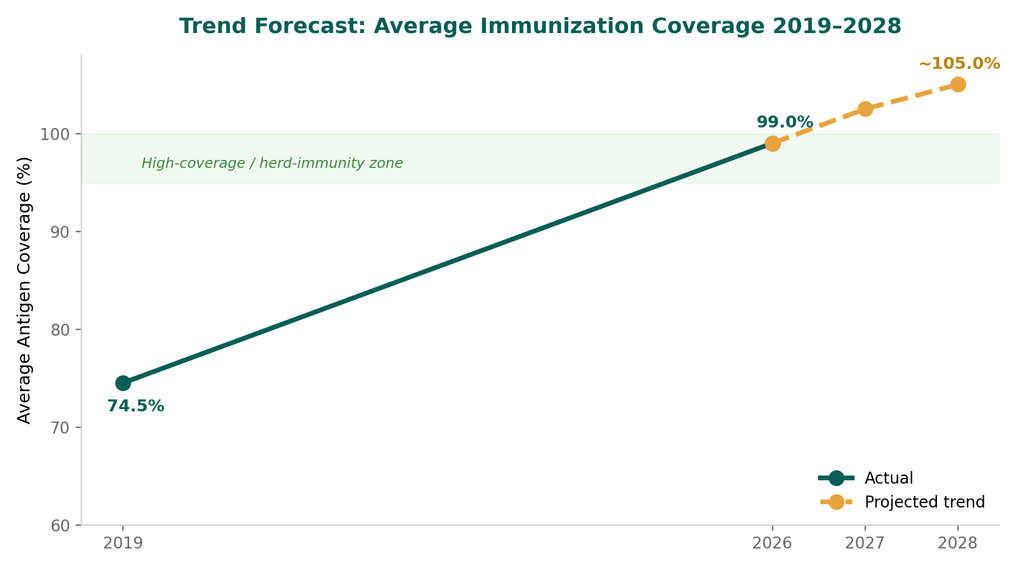
Figure 5. Linear trend forecast of average antigen coverage, 2019–2028.
Comments (11)
vnbet168169
Really appreciate how transparent the bonuses are here. No hidden traps, just a straight up great gaming experience. I am sticking with vnbet168169.
Susanna Hazeltine
Good day from Bonusbacklinks,
Top quality seo services to super grow your website backlinks!
BonusBacklinks.com – we provide daily backlinks and bring organic clicks to your site every day:
Get 85% Off
Quality daily seo backlinks
Organic website visits
Prices cheap as $1
Bonus coupon codes
https://BonusBacklinks.com/deal
Hope this helps,
Susanna from Bonusbacklinks support
phwin25login
I love how stable the connection is even on mobile data. It is perfect for playing on the go without any interruptions. Best choice is phwin25login.
appsummo invite
Hey Merf Pakistan Org team,
I have to share this – I found it browsing http://merf-pakistan.org and thought of you instantly.
If you do ANY kind of outreach for your business, this is that AppSumo-style bundle that replaces 12+ subscriptions.
It’s called the All-In-One Business OS. 7 products that work together:
**TACO RATING: (5/5) – This is the real deal.**
Here’s the breakdown, Sumo-style:
**1. BUY SMTP THAT ACTUALLY INBOXES – https://localsmtp.com/**
Tired of Gmail limits? These are Premium Inbox SMTPs – warmed, seller-authorized, tested LIVE to your own inbox BEFORE you pay. $50 each, $10 Standard. Volume discount up to 50% off. 30-day money back + free replacement if blocked. 8k-10k emails/day per SMTP. This is the infrastructure.
**2. BULK EMAIL SENDER – https://www.mailspro.uk/**
This is Mail Pro. Cold email on autopilot. Warm-up, multi-step sequences in same thread, unified inbox for all replies, SPF/DKIM/DMARC checks, AI follow-ups. 2-hour free trial, no card. Unlimited contacts, unlimited sending accounts.
**3. SEND BULK EMAILS WITH AI – https://aisalesagent.store**
You describe your goal in plain English: “Find CEOs in Texas and sell my service” – The AI Agent builds the list, writes the template, and launches. You just connect your SMTP from #1. You keep full control. English & Spanish.
**4. FIND LEADS AND SEND EMAILS – https://scrape.email/**
My favorite lead finder. 300M+ B2B database. Filter by company, title, industry, revenue, headcount, location. Preview matches FREE before you reveal. Also Instant Scrape for Instagram, LinkedIn, TikTok, YouTube, Google Maps – paste any URL, get emails, phones, contact pages, socials. 20 free leads to start + 4M Website Contact Pages bundle.
**5. WHATSAPP, SMS AND SOCIAL SENDER – https://www.unitedstatesmarketing.org/**
This is the game changer. All in One Suite – Email, WhatsApp, Facebook, Instagram, SMS + Android SMS Gateway, Telegram, iMessage, LINE, Viber, Website Chat in ONE dashboard. Unlimited channels, unlimited contacts, built-in CRM, anti-account-lock hardwired (no more banned numbers), AI agents with 100K context that qualify & close while you sleep. 1-day free trial, no card, 30-day money back.
**6. LEGAL ASSISTANT – https://ailegalassistant.org/**
Every business needs this. Your AI Lawyer 24/7 – Ask My Lawyer, ToS Analyzer [fairness rating A+ to F], Contract Review [finds red flags before you sign], USA Legal Solver, Business Registration [LLC/Corp anywhere], Immigration, Real Estate, Family, Employment, Forensics Suite, Credit Builder. 25 free credits on signup. Saves you $5k in lawyer fees.
**7. MARKETING TOOLS COMMAND CENTER – https://makemoneyfasttoday.com/**
The mother ship. This puts #1 to #6 plus 33 more modules in one Teable private database workspace. B2B Lead Finder [1000 pages deep], Email Blaster, Bulk Phone Scraper, B2B Email+Phone, Browser Agent, Auto Caller, Social Growth [Instagram, YouTube, TikTok, Spotify, etc via JAP credits]. Every account gets its OWN private database – no shared data.
**Why this stack for Merf Pakistan Org?**
Instead of paying for Lemlist + Apollo + Instantly + Intercom + Twilio + a lawyer… you own the infrastructure. Lifetime deals available on most tools. Own the tools, skip the agency.
I set it up for my businesses in under 15 minutes. You can literally go from zero leads to first campaign today.
Want the full playbook? All links again:
https://localsmtp.com/
https://www.mailspro.uk/
https://aisalesagent.store
https://scrape.email/
https://www.unitedstatesmarketing.org/
https://ailegalassistant.org/
https://makemoneyfasttoday.com/
Just reply “STACK” to this email and I’ll send you which plan to start with for merf-pakistan.org
If this was helpful and you set it up, let me know it was approved – I love seeing Merf Pakistan Org winning.
To your growth,
Sandby
App Summo
P.S. Use lawfully and permission-based. These tools are powerful – anti-ban and warm-up is built-in, but best results come from truthful, relevant messages like this one. Your merf-pakistan.org reputation matters.
Lilla Bellasis
Hello,
I am Lilla Bellasis from FreeB2BData
It is with sad regret to inform you that we are shutting down
We have over 252 countries and over 33 million companies available in our database with phone numbers, industries, emails, etc.
Please come and download your data in the next 24 hours.
https://Lilla.freeb2bdata.org
Regards,
Lilla Bellasis
Sharon Carter
Hi,
If this is handled by someone else in the business, would you please pass it on?
At Website Outreach, we help companies like yours generate new sales enquiries, completely free. Just like this message reached you, we can contact 500 businesses matching your target market directly through their websites, all responses come straight to you, with full engagement tracked live in our online portal.
No catch, no obligation, and no card details required. Get started with your FREE 500-business trial here:
https://websiteoutreach.pages.dev
Best,
Sharon Carter
Website Outreach
To stop these messages: https://hi.teamreplybox.com/stop?d=http://www.merf-pakistan.org/
idhadiah138
I really appreciate the transparency of this site. The rewards are clear and the winning feeling is amazing. Best at idhadiah138
Carmon Laflamme
Hi,
You probably noticed we went quiet.
We did shut down FreeB2BData — but it wasn’t the end. We took it offline to rebuild it from scratch, much bigger and much better.
The new version is live.
Here’s what’s inside:
900 million people — names, job titles, companies, verified emails
33 million companies — full business records with phones, emails, websites, and addresses
All data is live — always current, always fresh
Unlimited exports — download as much as you want, whenever you want
To mark the relaunch, we’re running a launch promo:
Lifetime access for just $50 — one-time payment, no subscription, no renewals, unlimited exports forever.
But it’s strictly limited — only 20 seats left.
Claim your lifetime seat here https://Carmon.freeb2bdata.org
— The FreeB2BData Team
vnwq88
I’ve been trying a few platforms lately and this one really stands out. The interface is super smooth and the payouts are fast. Definitely my new go-to spot vnwq88
Lora Chin Kaw
Hi,
Quick one — we just opened FreeB2BData, a B2B lead finder that gives you people, companies, emails and full outreach tools in one place.
Here’s what you get:
People search — names, job titles, departments, LinkedIn profiles, verified emails
Company search — phones, websites, addresses, industries, categories
Powerful filters — country, state/province, city, industry, job title, website
Unlimited CSV exports — take your leads anywhere
Built-in email campaigns — send plain text or HTML, with live open/click tracking
Data enrichment — we scan websites & databases to fill in missing emails and add new companies matching your filters
100,000 emails per month included from our servers.
Live data updates — the database grows every day
Affiliate program — earn 20% commission on every referral
Claim your seat: https://freeb2bdata.org
Bonus: If you use RoboRep Dialer for cold calling, grab the Chrome extension — it pairs perfectly with the leads you pull from FreeB2BData:
https://chromewebstore.google.com/detail/roborep-dialer/gfmifjmkopgfgafdejokdikldlmpejkl
Questions? Just reply to this email — I read every one.
Talk soon,
FreeB2BData
Jerry Pointer
CompanyScout is now live — and it’s the easiest way to get B2B data in bulk.
Search any industry, any country, or drill down to a single town and get all the companies there — with phones, emails, addresses, and websites.
Unlimited and always updated — no caps, no stale lists
Any industry, any country, any town
Export the entire result set in one click
Here’s a 60-second walkthrough:
https://screenrec.com/share/Ou7QUDCaiH
Download it free:
https://companyscout.world